Hi guys, long time no see!
Yesterday evening, sitting on my PC as always, I had this voice in my head, that I should go to the Apple Museum in Utrecht. It was so spontaneous, my wife was shocked because normally I plan everything, but I want to be a little more spontaneous. Also I wanted to follow my passion. It was the first time after long time I wanted something really bad, and the next day, we drove to Utrecht (220km =136,702 mi).
Arrived at the Apple Museum we were the only one visiting, because we went to the first appointment we could get 10-11 am. I paid €36.50 for the Apple Museum tickets, which included one adult ticket for €21.50 and one student ticket for €15.00.
The beginning of the Museum
Everything begins where Apple began, in the Garage!
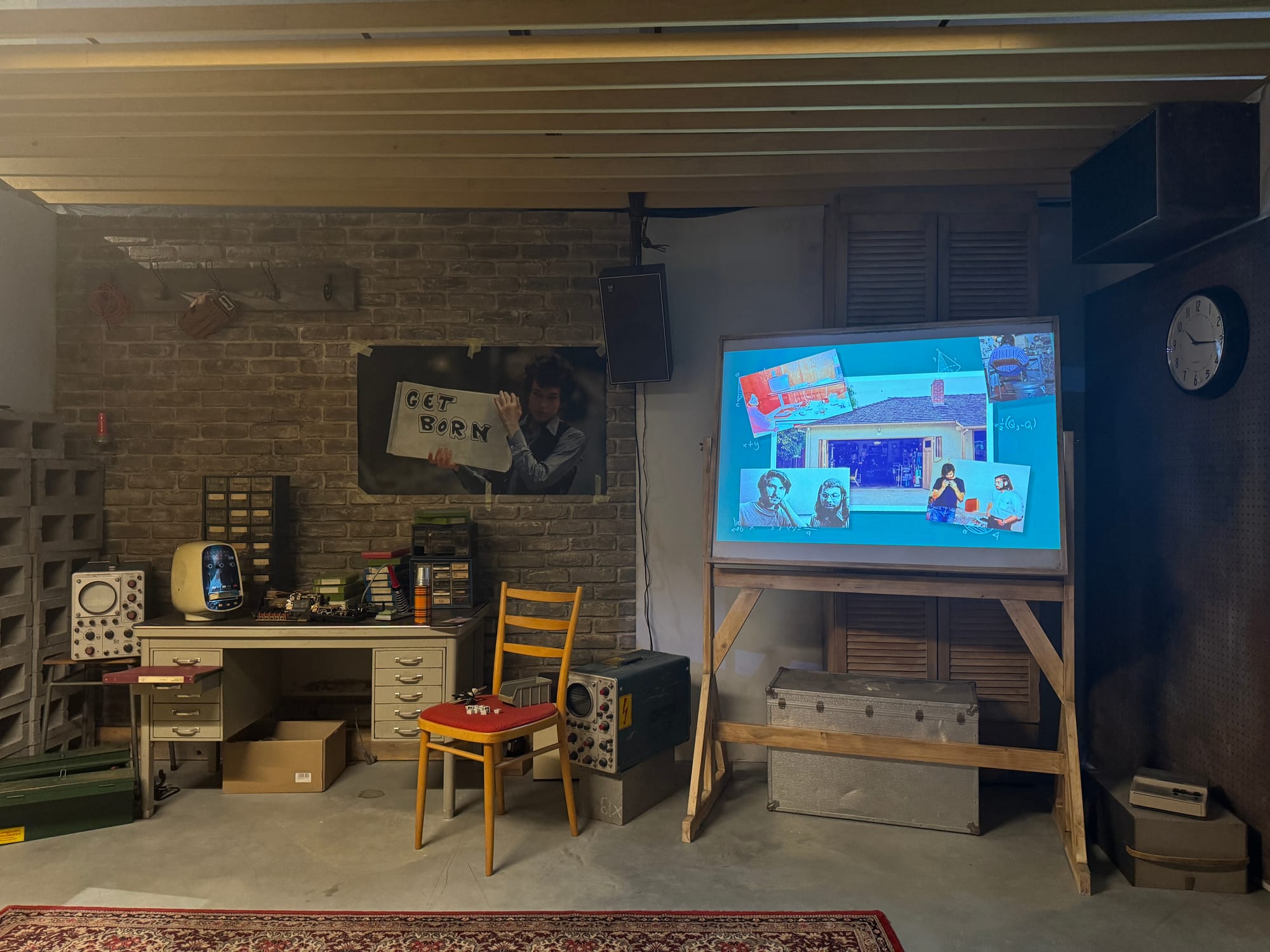
The tour starts at the replica garage of the Jobs Family, where Steve Jobs and Steve Wozniak, created their first Apple device, the Apple 1. They show a little clip where they talk about the beginning in the garage. Really nice to get the feeling in the garage, it feels like you are there.
After the short movie the door opens to the museum, where it stands, the very first ever, the beginning of Apple and a revolution.
Apple 1 (1976)
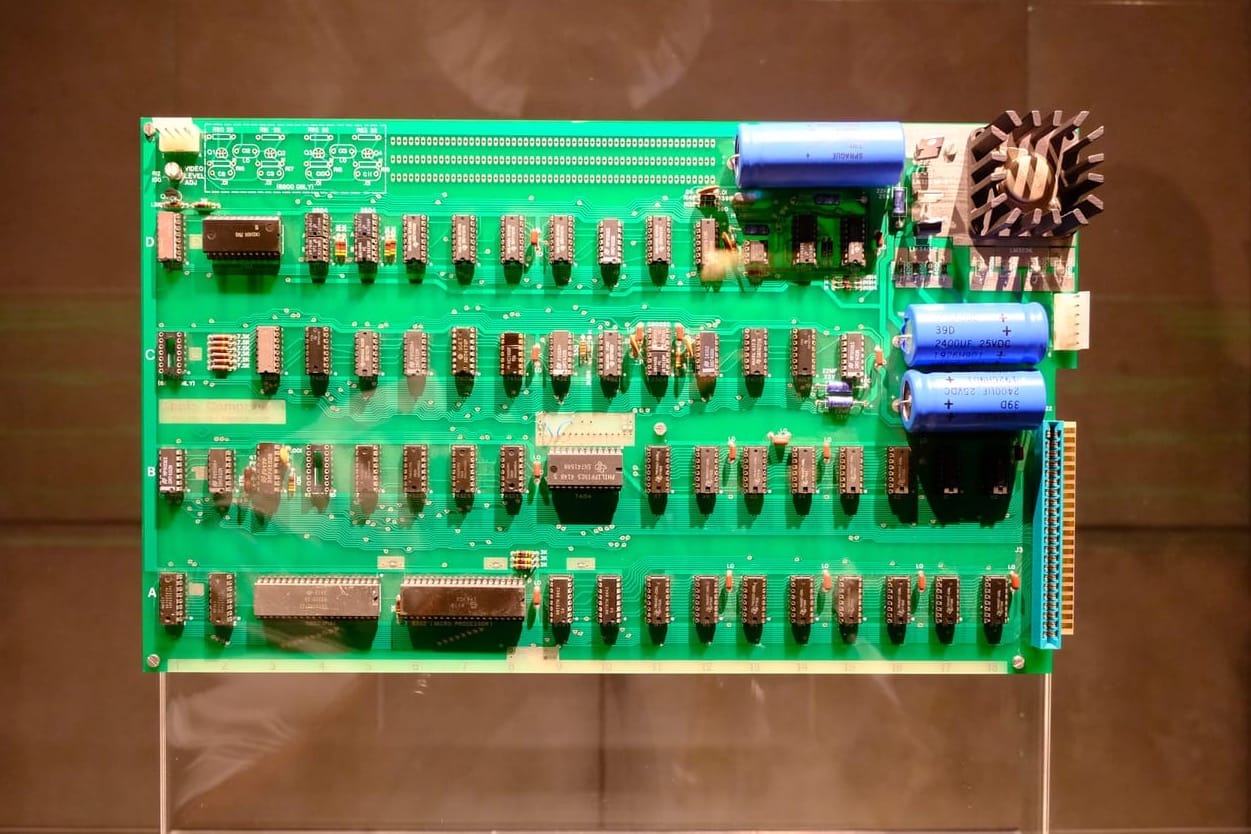
Very nice to see this piece of technology. Launched 1976 designed by Steve Wozniak aka "Woz", as an hobby project. At this time the common thing was only build-it-yourself kits. Steve Jobs convinced Woz to sell the motherboard fully assembled.
There it begins, the story. The first order came from The Byte Shop in Palo Alto. They ordered 50 units, with the condition - delivering them in working condition.
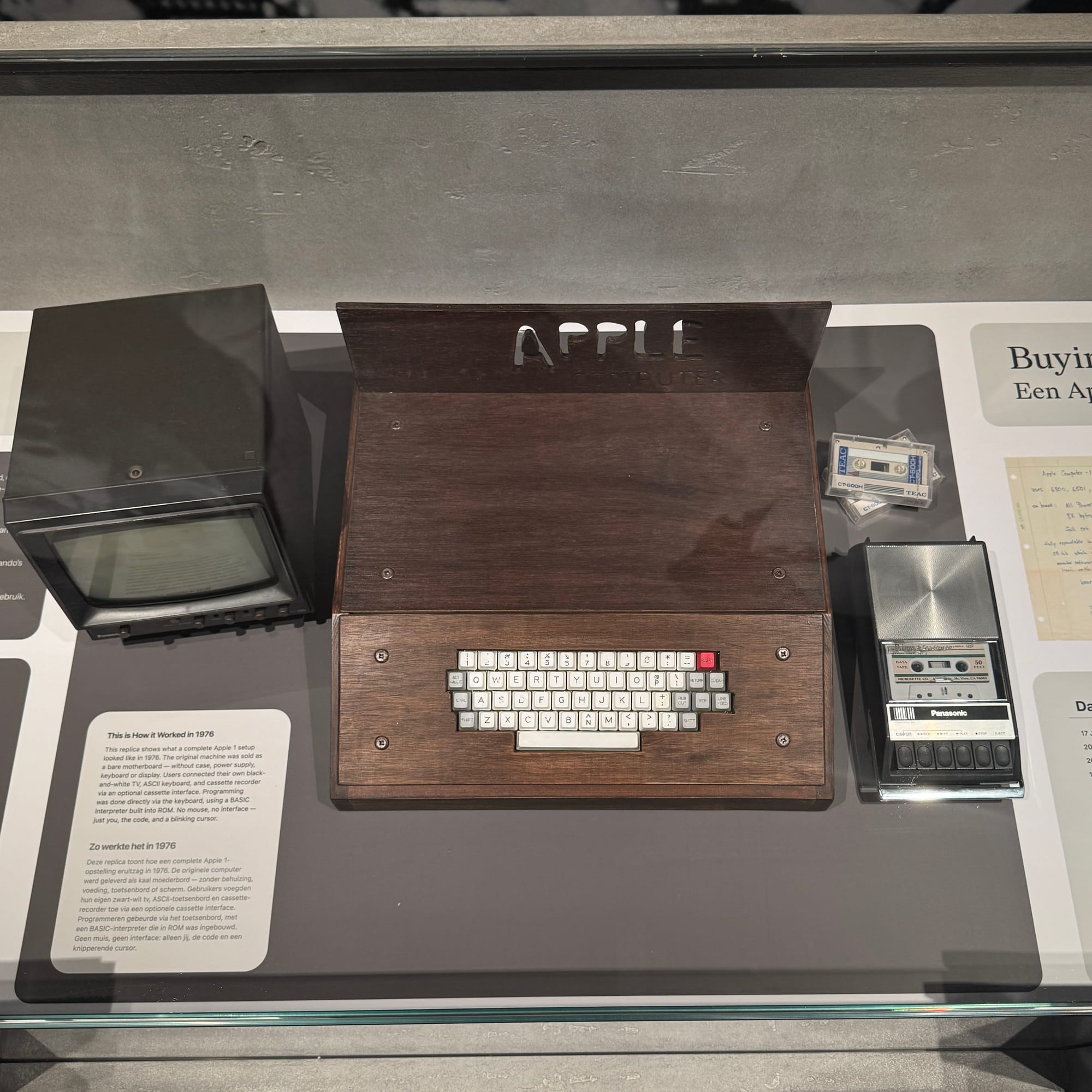
The text says:
This replica shows what a complete Apple 1 setup looked like in 1976. The original machine was sold as a bare motherboard - without case, power supply, keyboard or display. Users connected their own black-and-white TV, ASCIl keyboard, and cassette recorder via an optional cassette interface. Programming was done directly via the keyboard, using a BASIC interpreter built into ROM. No mouse, no interface - just you, the code, and a blinking cursor.
I stand there like 5 mins, and was a little bit shocked because it is unbelievable how this worked. I am actually typing on my Macbook Pro and the display is sharp, the keyboard is soft, and easy to use, an I even need only to press one button to turn the power on.
There was a list which explained how to setup an Apple 1:
- Buy separate transformers, an ASCII keyboard, a TV, and optionally a cassette recorder and cassette interface.
- Connect all components.
- Hook up the cassette recorder to load or save BASIC
- and programs.
- Power on and the screen waits for your commands
- in machine code, or load BASIC from cassette first.
- Execute your code and save it to cassette for future use.
Today you need to buy the MacBook and lets go.
Apple 2 (1977)
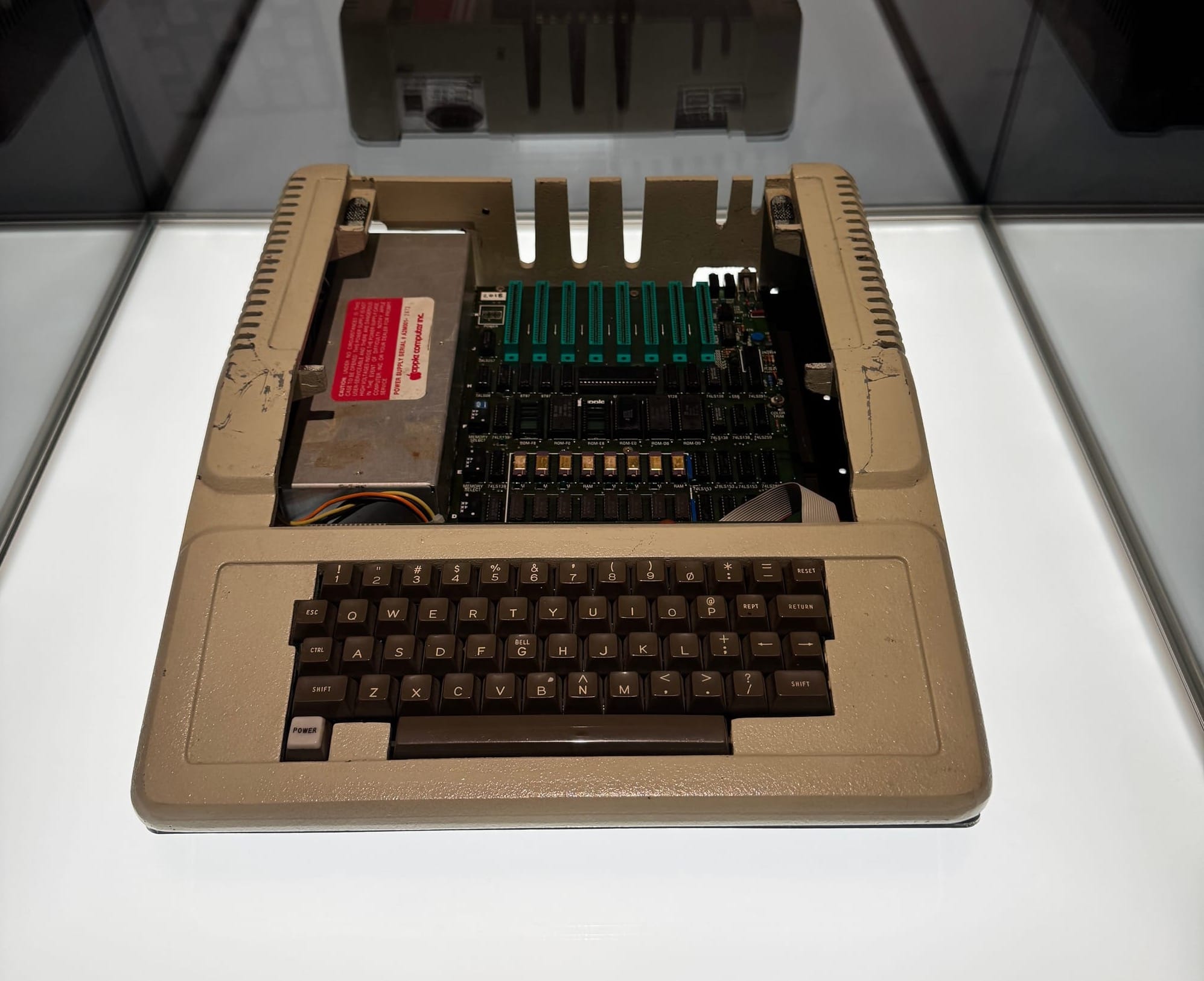
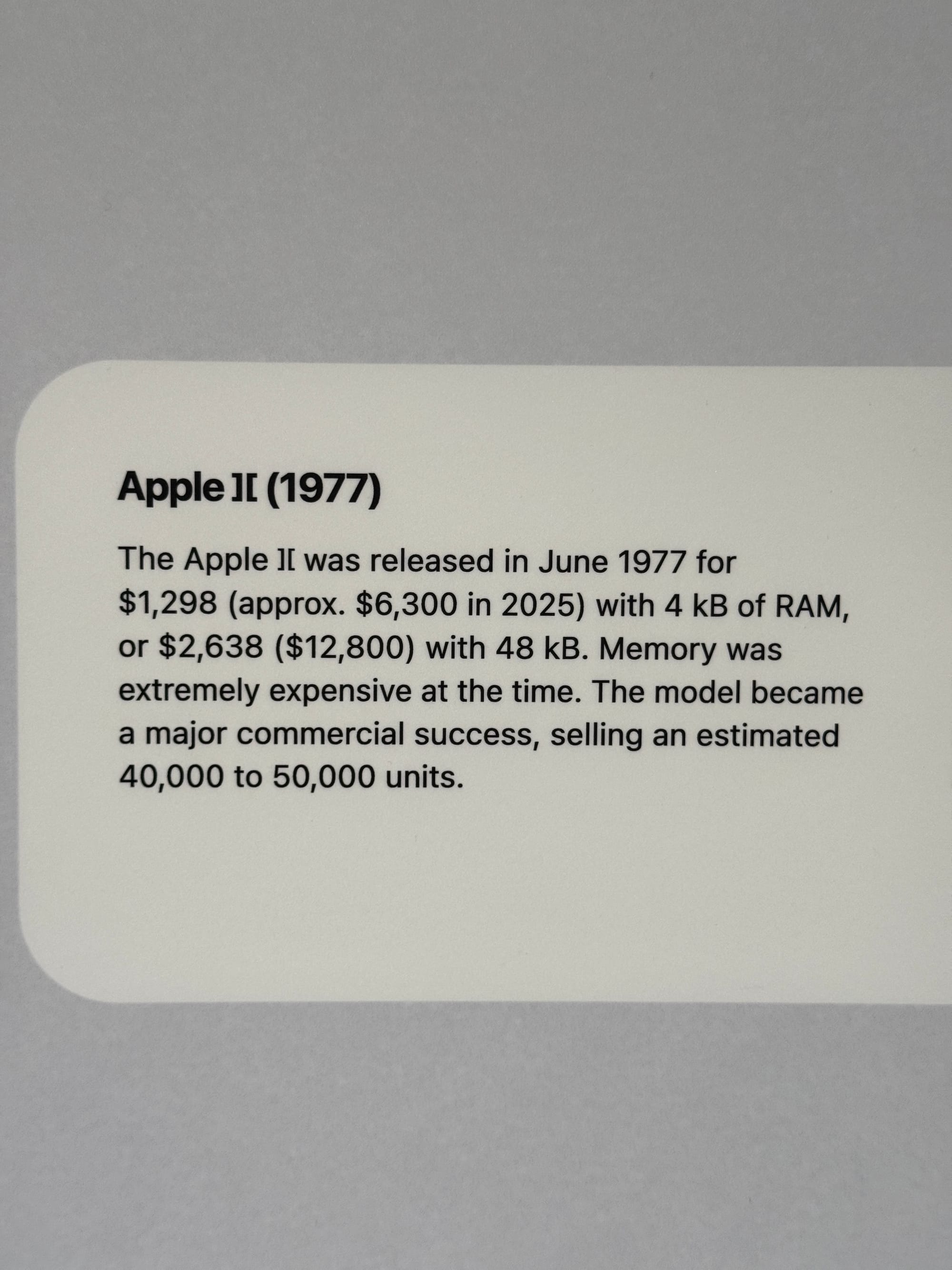
Launched 1977, the Apple ][ becoming its form to look like the personal compute we have today. The first thing came to my mind when I saw this, was a typewriter. No I am not that old old, but in the 6th grade my mother forced me to go to a keyboard course and they allowed us only to use typewriters. Sure I didn't liked it, but I am glad my mum send me to this course. Thanks mom. Anyways, the design of the motherboard was from Steve Wozniak, on a single printed circuitboard, and the first support color via television. What kind of mindblower was that? This question came very often in my mind in the museum. The Apple ][ was not only technically advanced but also commercially well positioned, programmable, affordable, and ready to use. Crazy times in the business world.
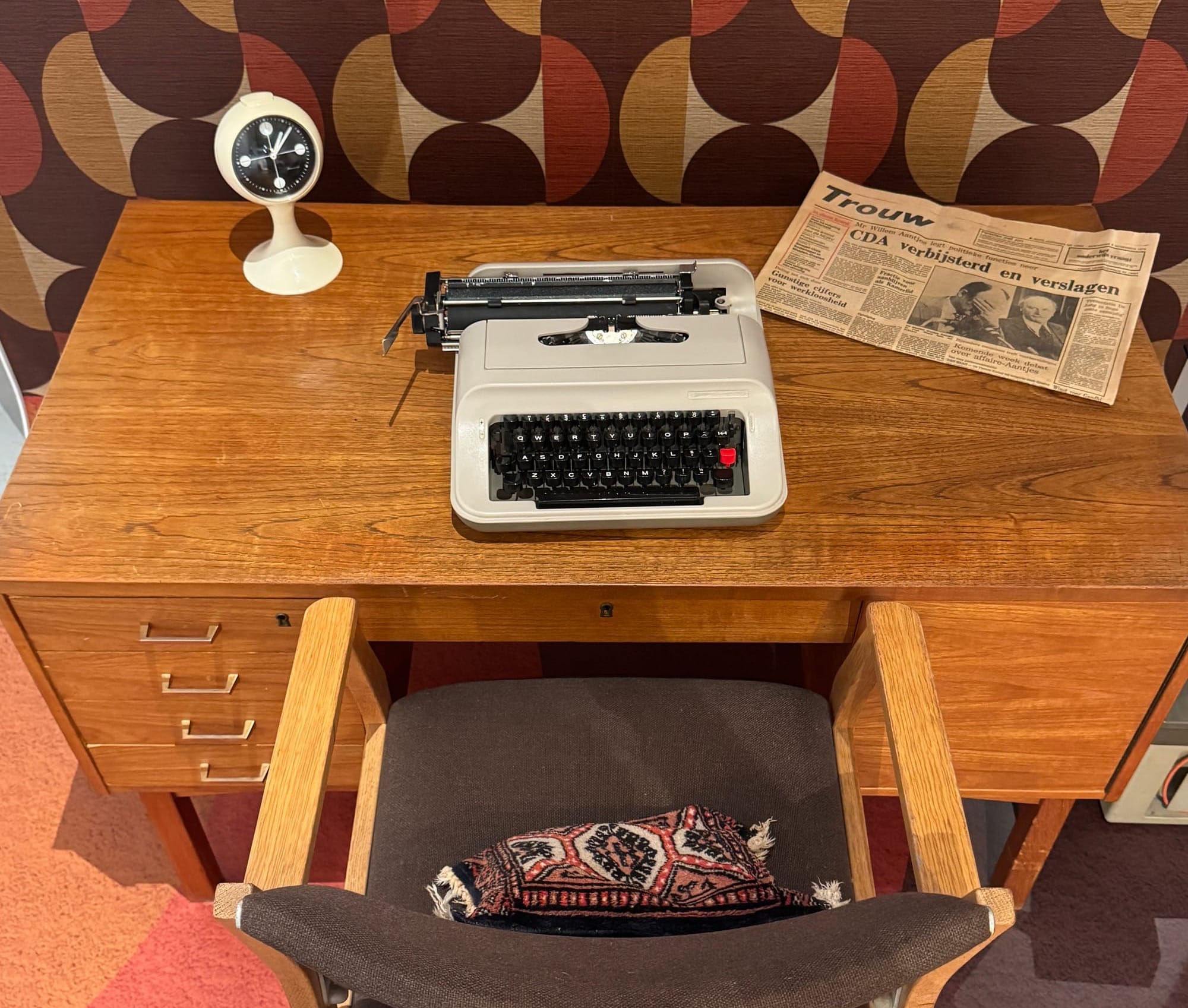
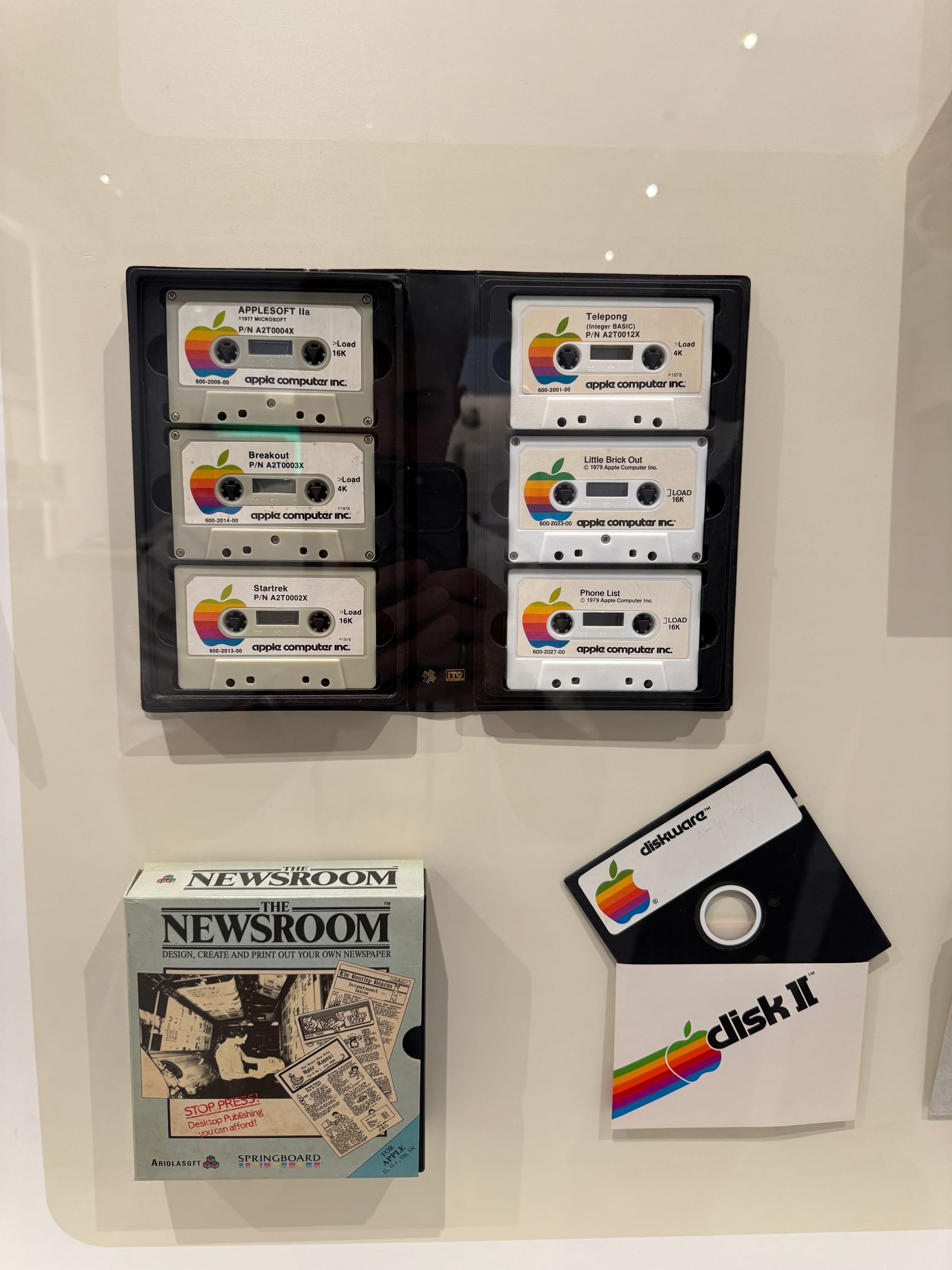
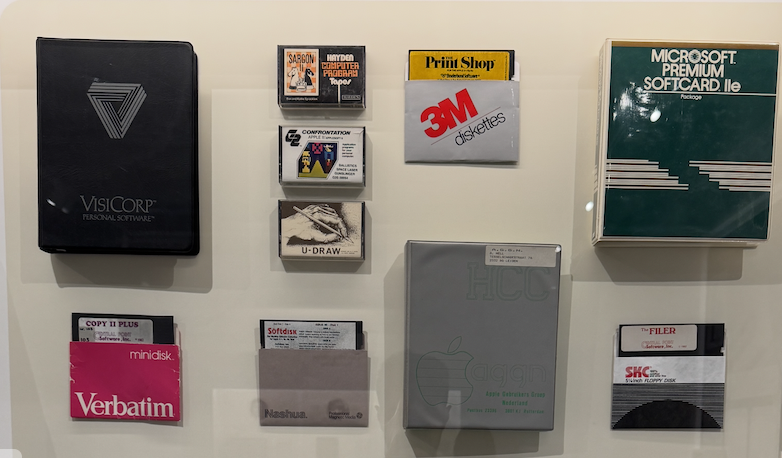
After the Apple ][ there was a room full of details, like the Interface Cards for the Apple II which is a major reason for the success with eight open expansion slots (you can try to read the text in the picture). There was almost anything enabled: adding extra memory, a videocard, running other operating systems, recording measurements and so on.
The Apple II was not the most powerful computer, but it was the richest by far the most software was developed. The diversity and the scale of this software were what made it so popular until the early 1990s. Long before my time.
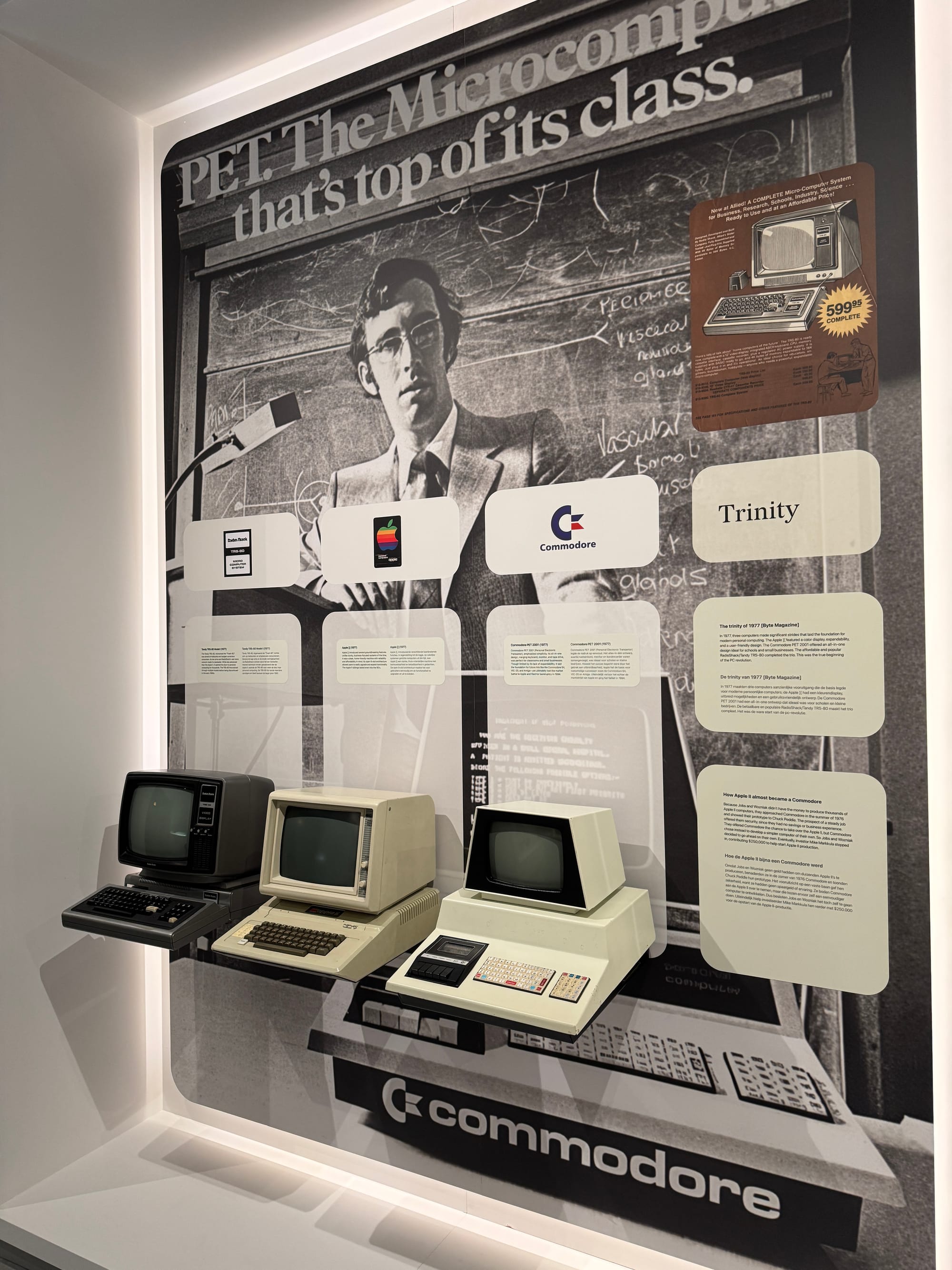
Also you can see the "Trinity of 1977" - Commodore, Apple 2 and the TRS-80. They all were special, but seeing the Apple ][ with its rich software, color display, and user-friendly design right there in person was just great.
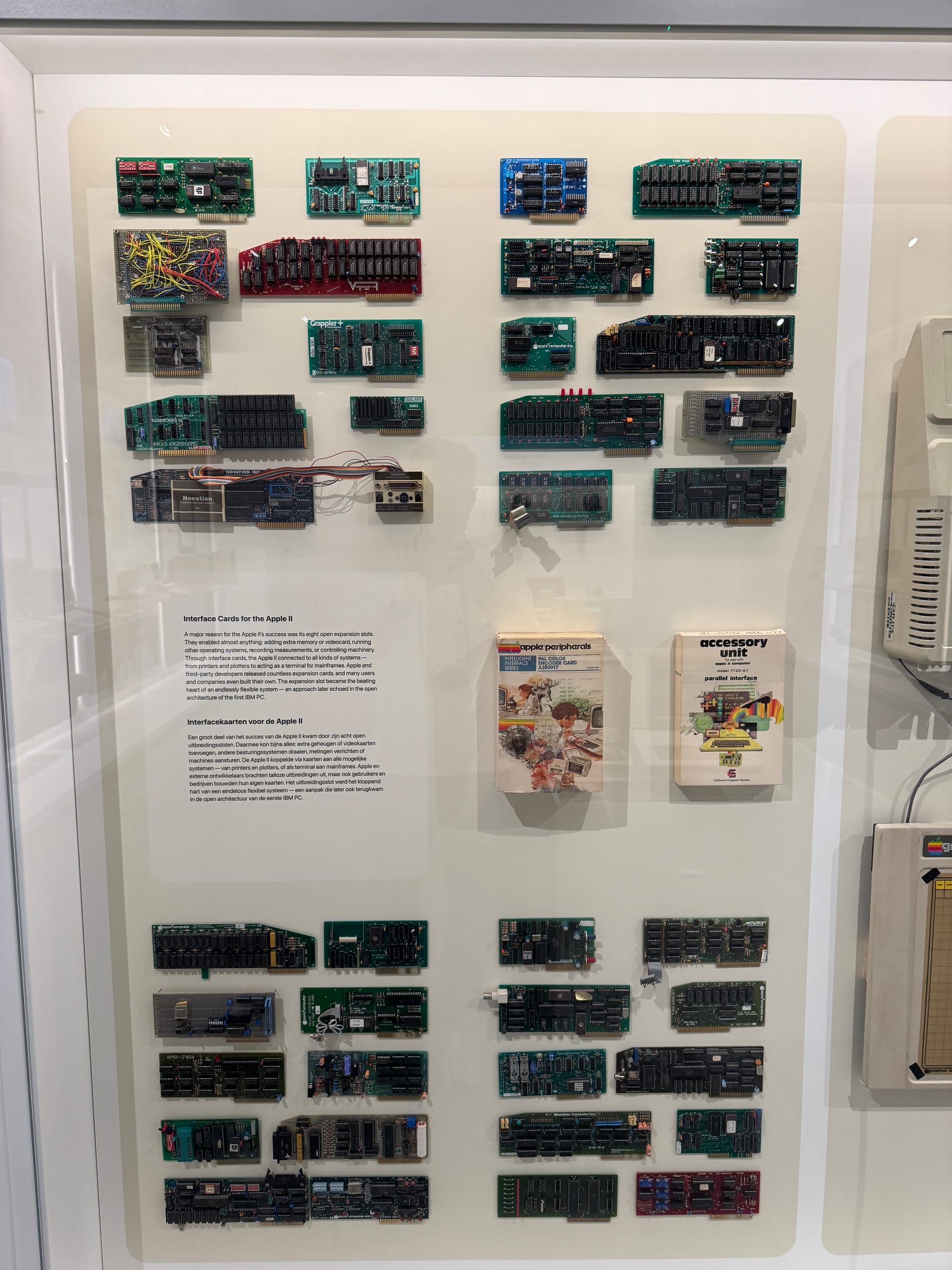
Apple //c (1984)
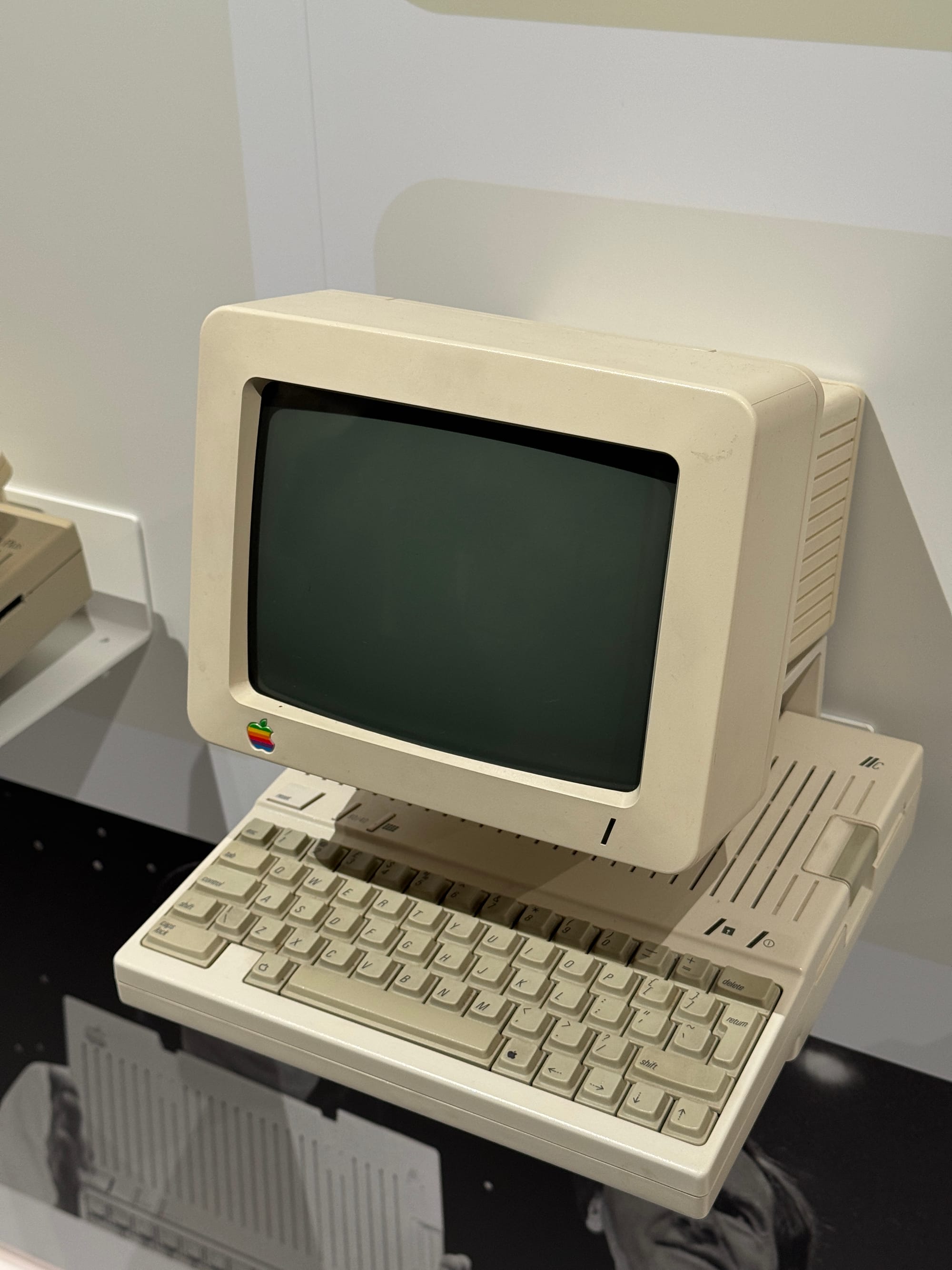
Going around looking at so many Apple computers, I fell in love with the Apple //c (compact). Call me crazy but it looks so nice, that piece of tech was mind-blowing for me. If I had some place to put it in I would buy it. Only to look at it. The first small and portable version of the Apple II. Simplicity and everyday usability to personal computing in 1984. I think if I lived in that time I would have tried everything to buy it.
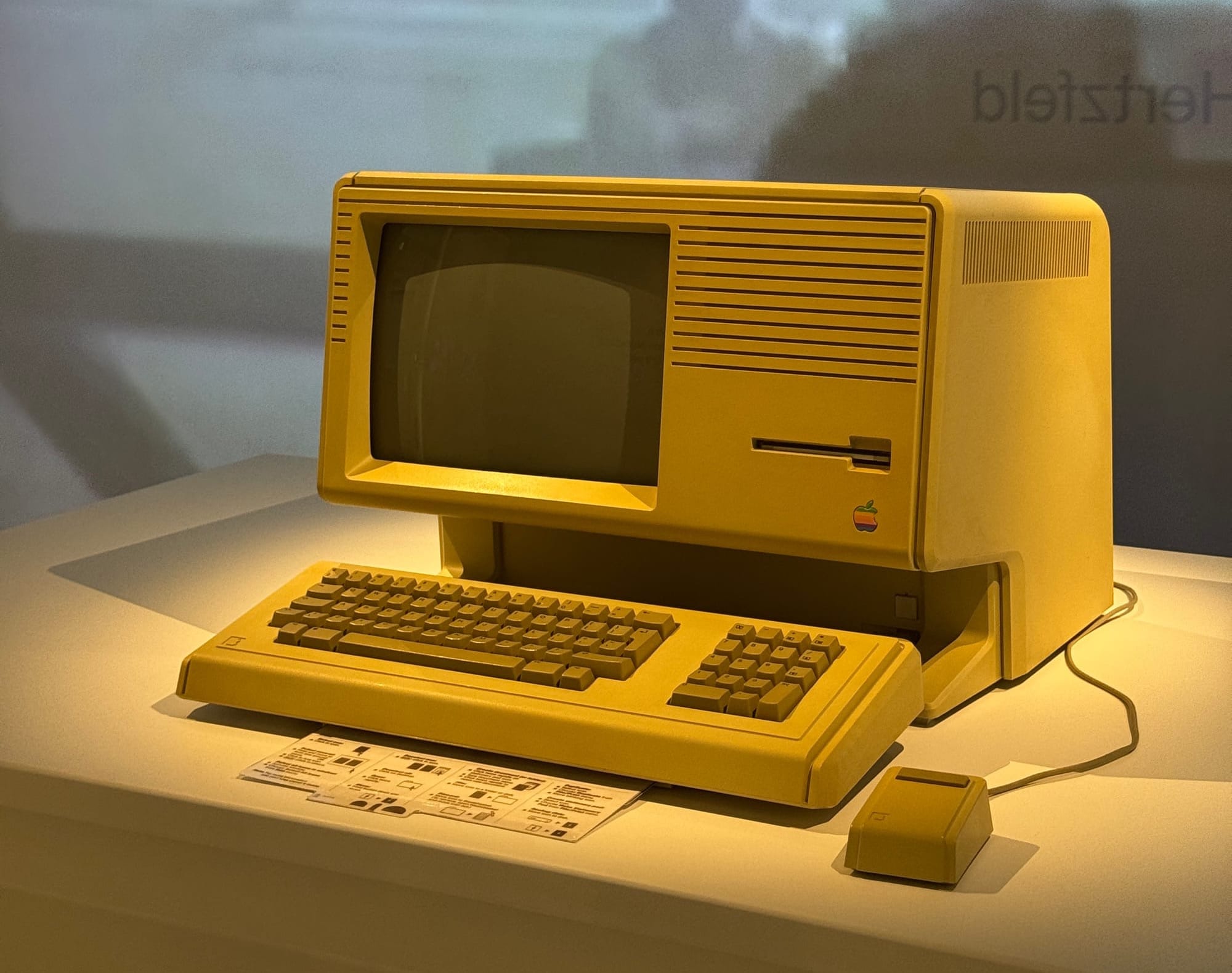
Apple Lisa (1983)
Enough of Apple II, coming to the next room, there was something bigger and a mouse? Yes, it was the Apple Lisa! Steve Jobs, named it after his daughter, even if he didn't want to tell it but later he said it is of course because of his daughter.
For me it looks like some old American TVs, which I only know from movies or series like Fallout. I think it has its own charm.
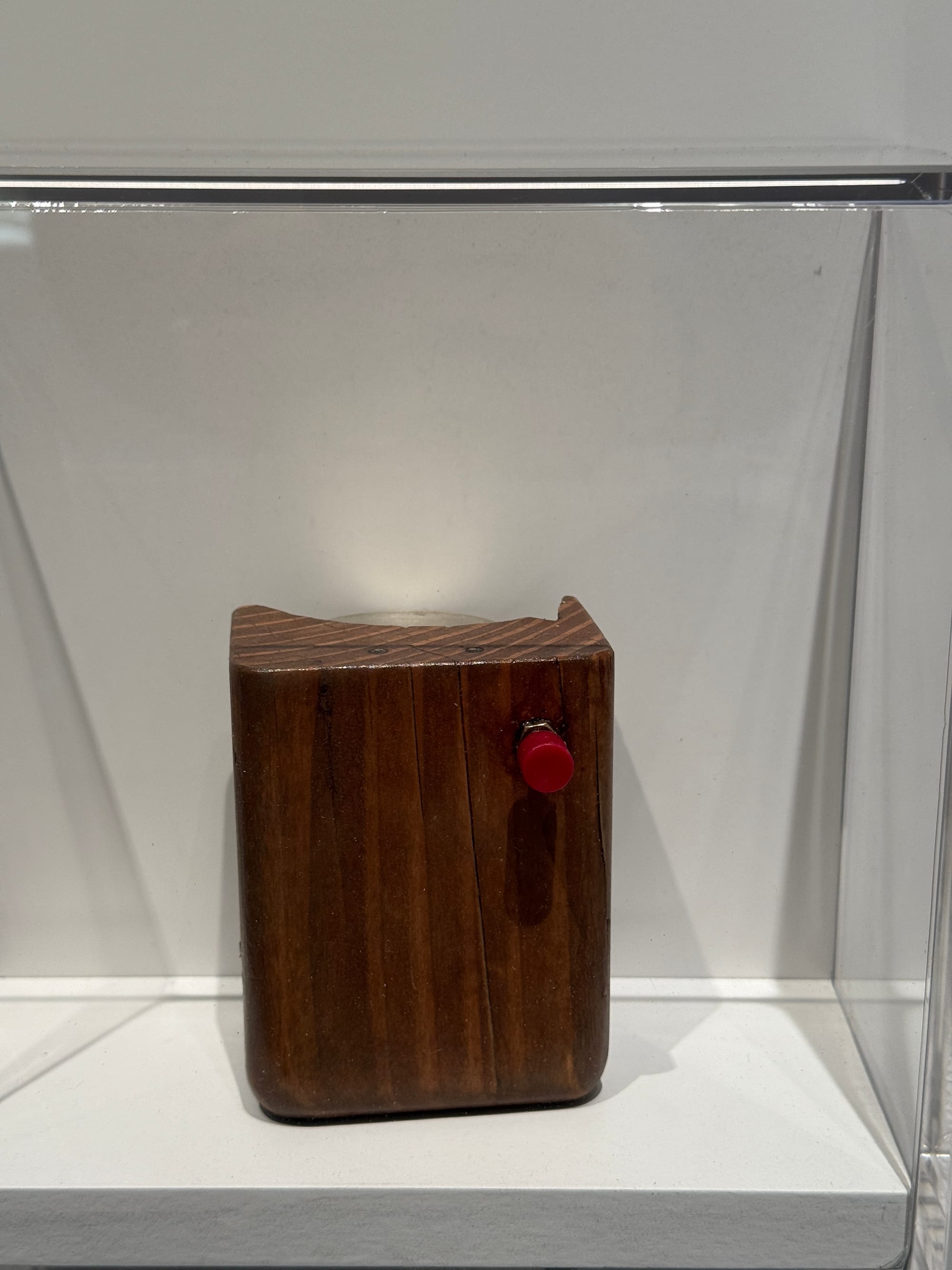
What really blew my mind was the mouse, I learned about Engelbart Mouse and - The Mother of All Demos 1968.
This piece of wood is a replica of the wooden mouse with two metal wheels, and the very first prototype of what we now know as the computer mouse (1964).
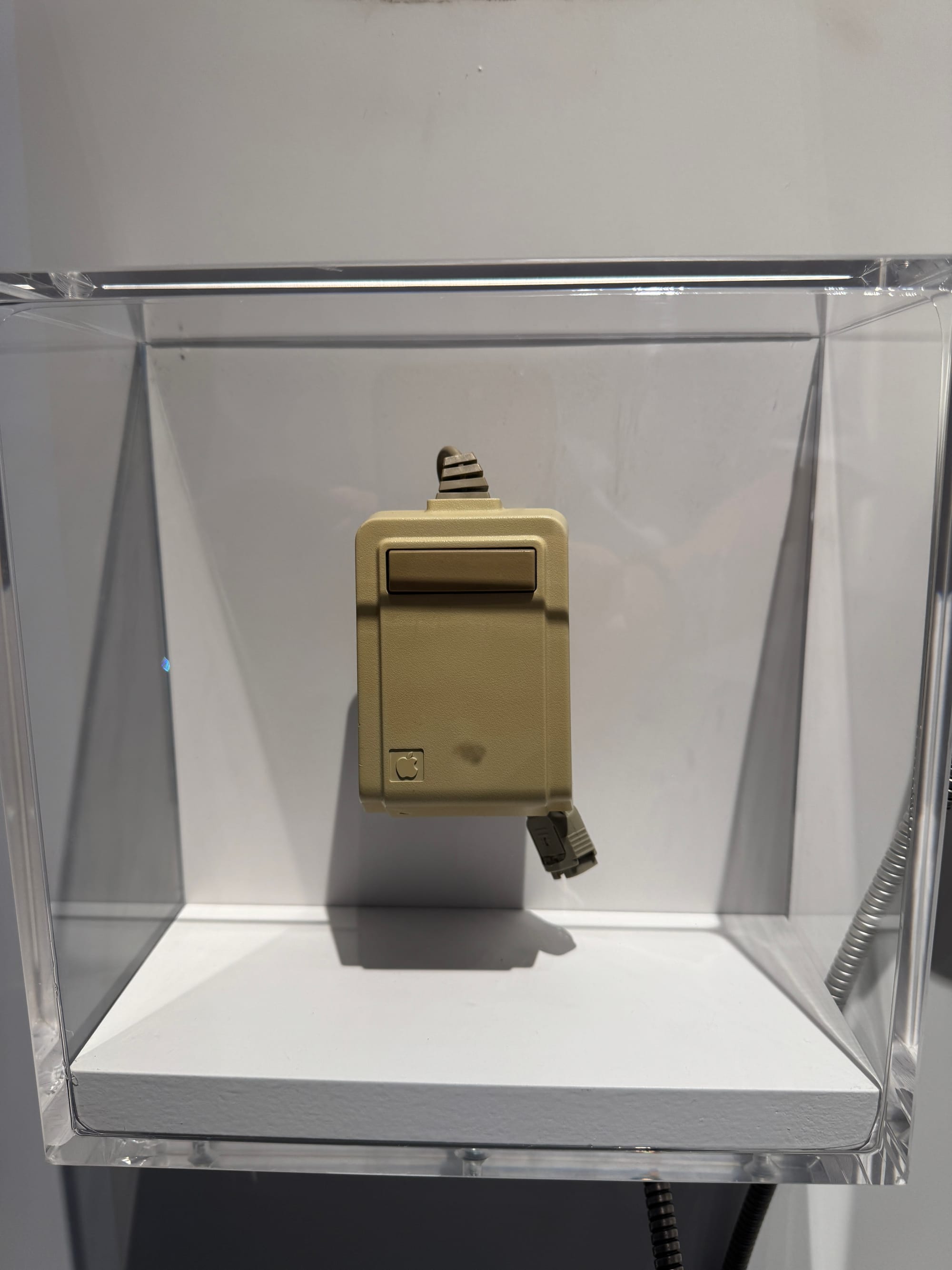
The Apple Mouse (1983) - The First Mouse for the Masses. First commercially available computer mouse. Developed and under license for the Apple Lisa, the beginning of the mouse-driven interaction for everyday users. Designed to be manufactured for under $25. Today the mouse is very rare and over 1000$ among collectors.
The Macintosh (1984)
We went into a room, the door closed and it was dark. After a while they showed a commercial, it was THE commercial, the award-winning commercial for the Macintosh at the Super Bowl during 1984, directed by Ridley Scott, known from movies such as Alien and Blade Runner. They showed some informations about the video clip before it started. The video translated the dystopian atmosphere of George Orwells 1984 into a gray world where a submissive crowd listens to Big Brother like figure - a metaphor for IBM. In the clip a female athlete throws a hammer and the big fans above us went full on which shocked us a little bit, because we didn't saw this coming, it was so nice!
The door opens and there it was the Macintosh and also a speaker which said "Hello, I am Macintosh" That was funny.
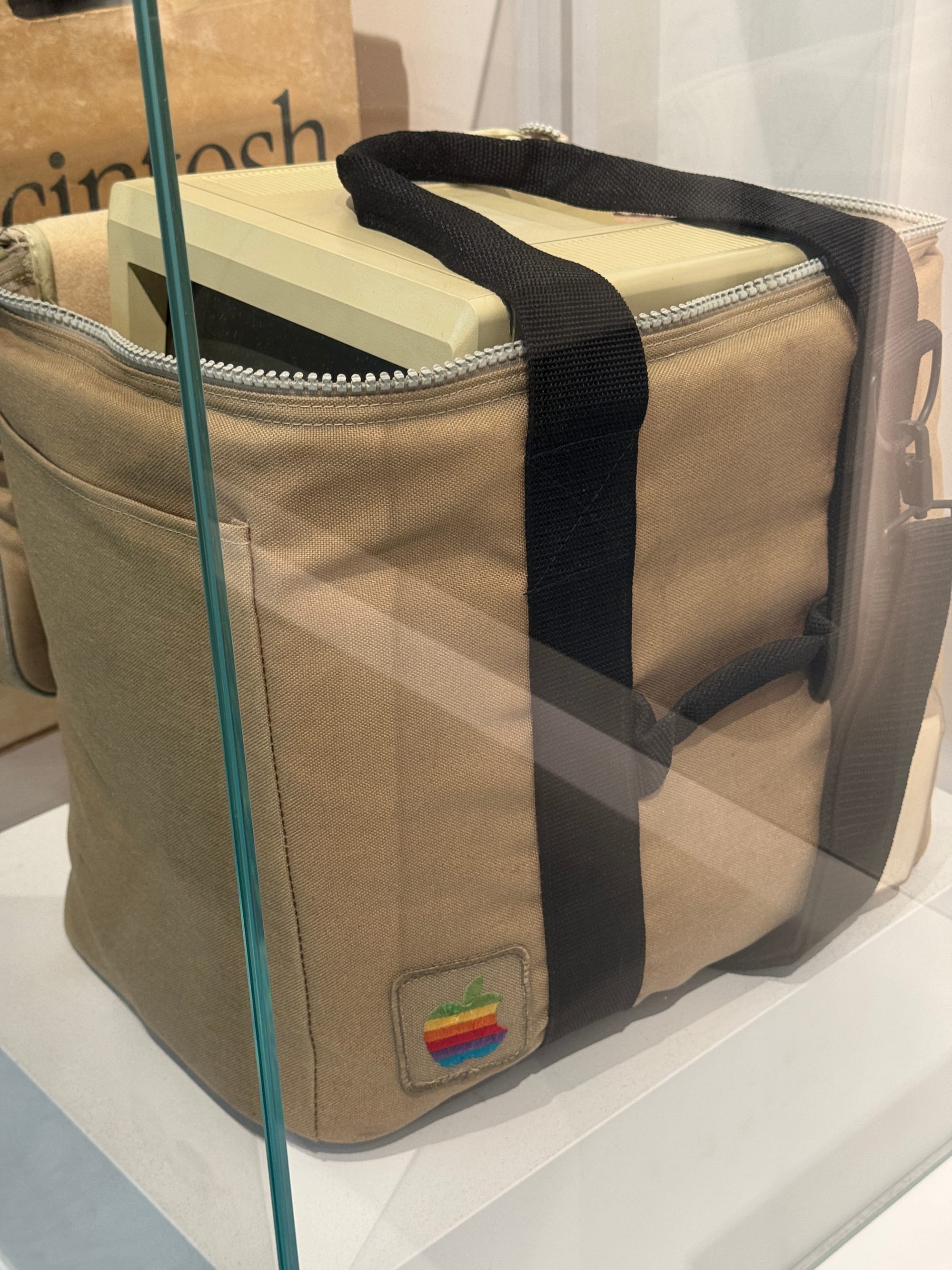
What I didn't know, was the bag to transport the Macintosh, why is everything from past so stylish? I think people took more time and that's why.
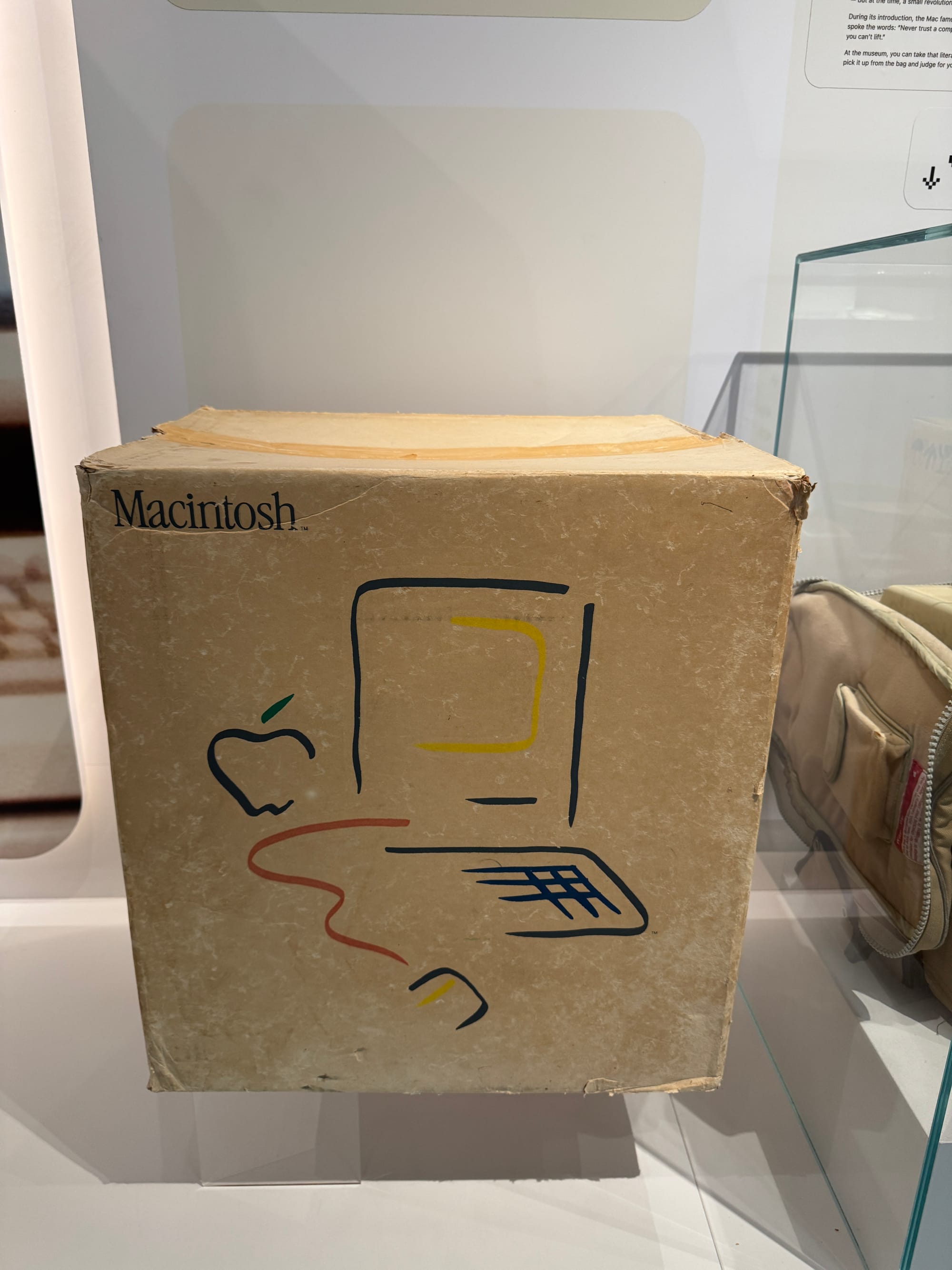
"Even the cardboard box was designed with as much care as the computer itself, featuring beautiful graphics and the signature "Macintosh' typography." - Andy Herzfeld - Software Engineer, member of Apple Computer's original Macintosh
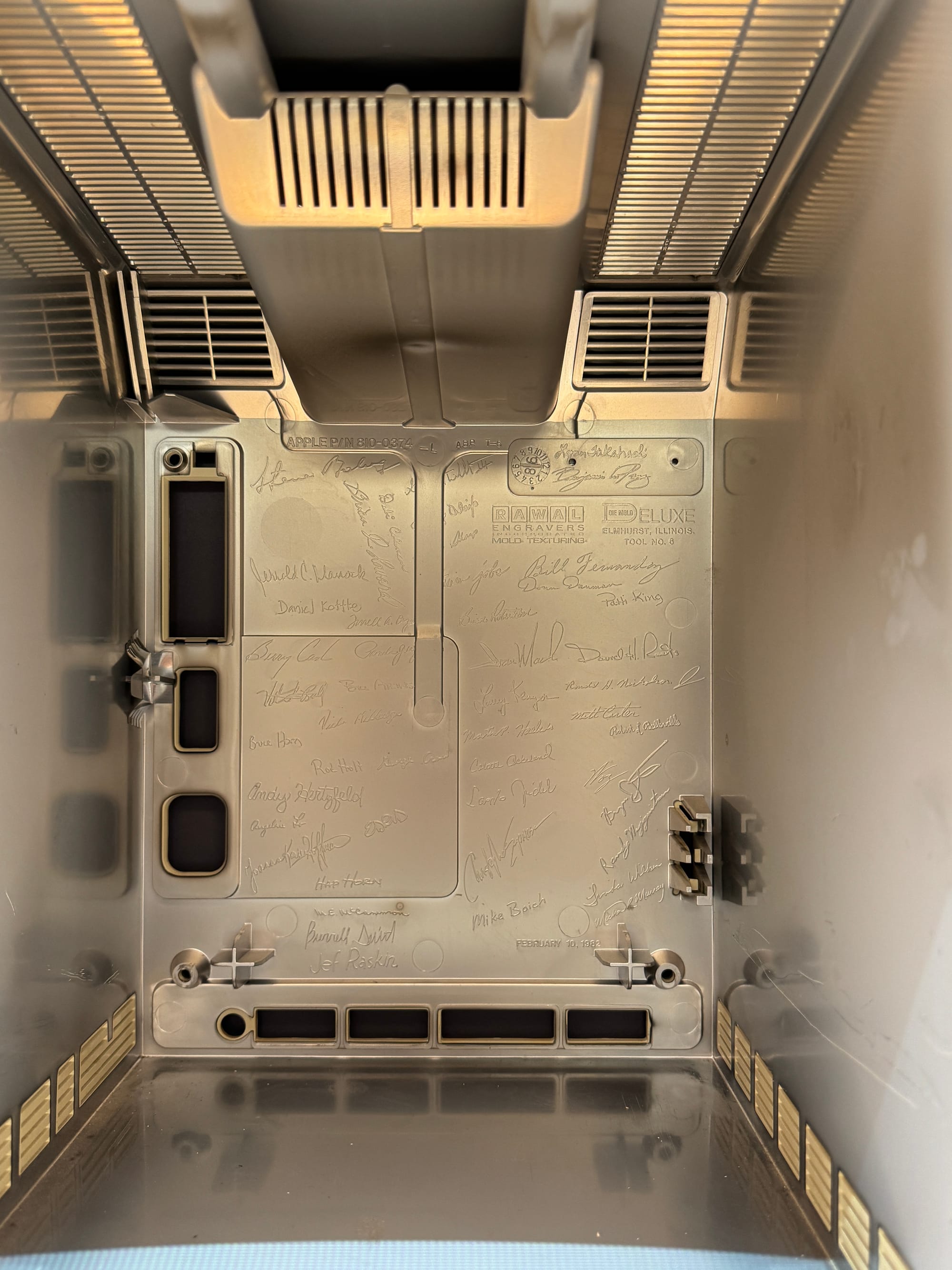
Also on the inside of the Macintosh you could see the signs of the member who worked on the Macintosh, on this day I learned a lot about the Macintosh:
The NeXT era (1988)
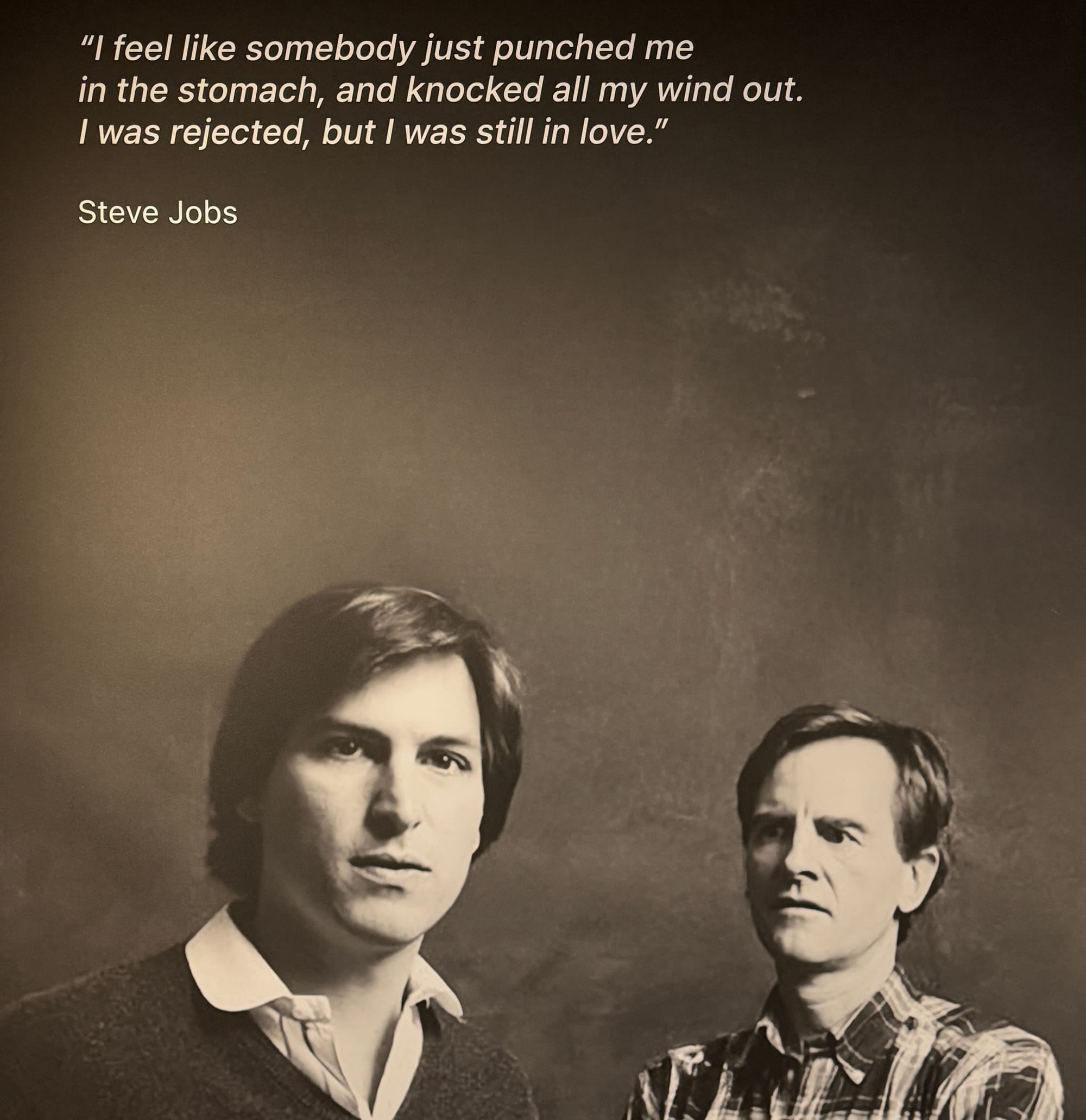
The NeXT chapter (little wordplay here) is a big one. The picture above shows Steve Jobs and John Sculley - The Marketer in Charge. He came from Pepsi to Apple because Steve wanted him. What began as a partnership ended in separation: Steve left Apple, and Sculley took full control. Then the NeXT era began. Seeing this picture was perfect timing, because I am actually reading a book about Steve Jobs’s time during the NeXT era right now. It's called "Steve Jobs in Exile" written by Geoffrey Cain.
Before this visit, I had never seen a NeXT computer in person. I learned that it was never a massive commercial success, but it helped spark a technical revolution. You know what's very cool? The world's very first website ran on a NeXT Cube at CERN in Switzerland.
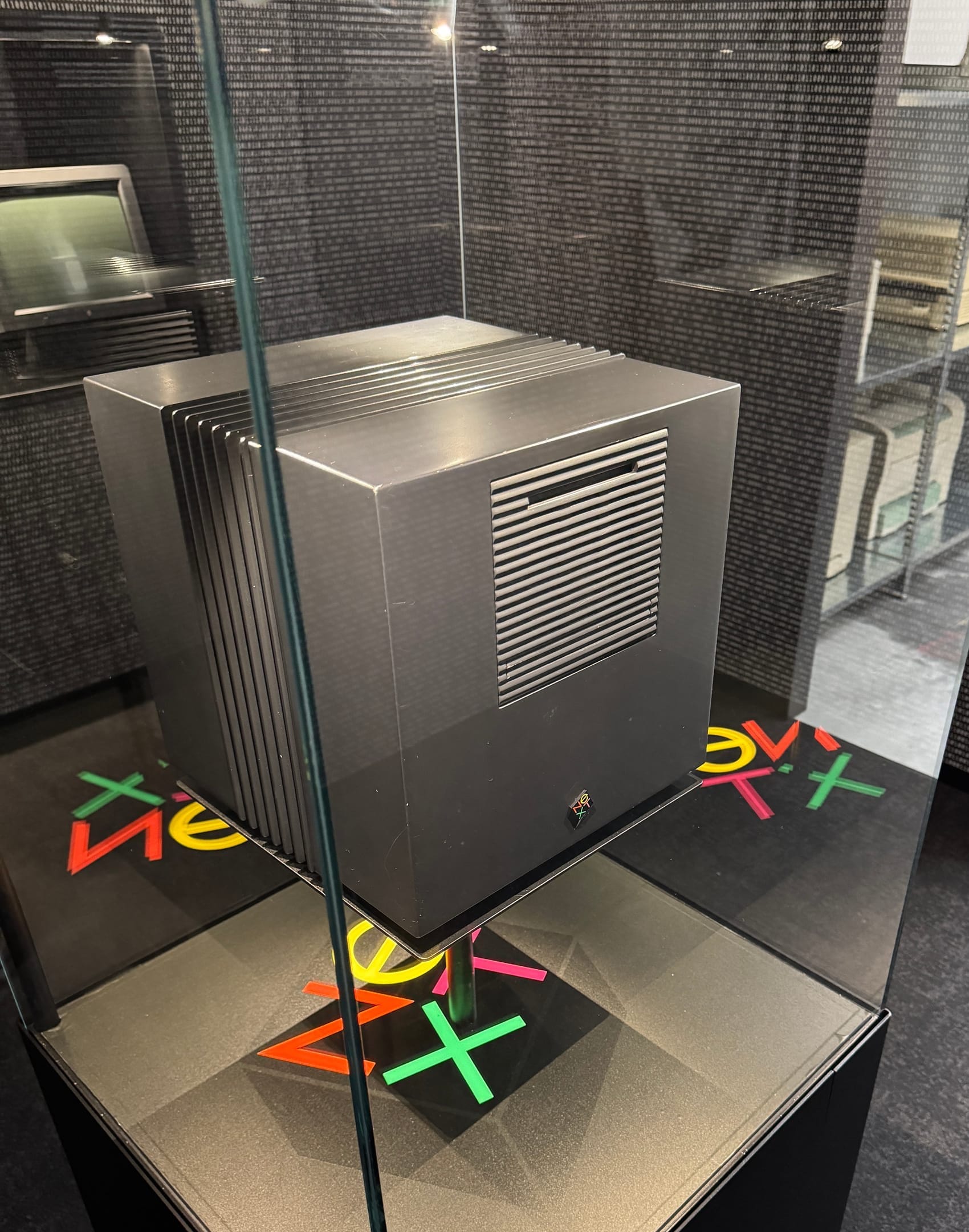
The NeXT era turned Steve Jobs into the Steve Jobs we know today. And NeXT brought him back to Apple.
"Think different" (1997)
One of my highlights was the next section. There was a door with a quote:
"Here's to the crazy ones. The misfits. The rebels. The troublemakers. The round pegs in the square holes. The ones who see things" - Steve Jobs
I knew, this must be the "Think different era" of Apple.
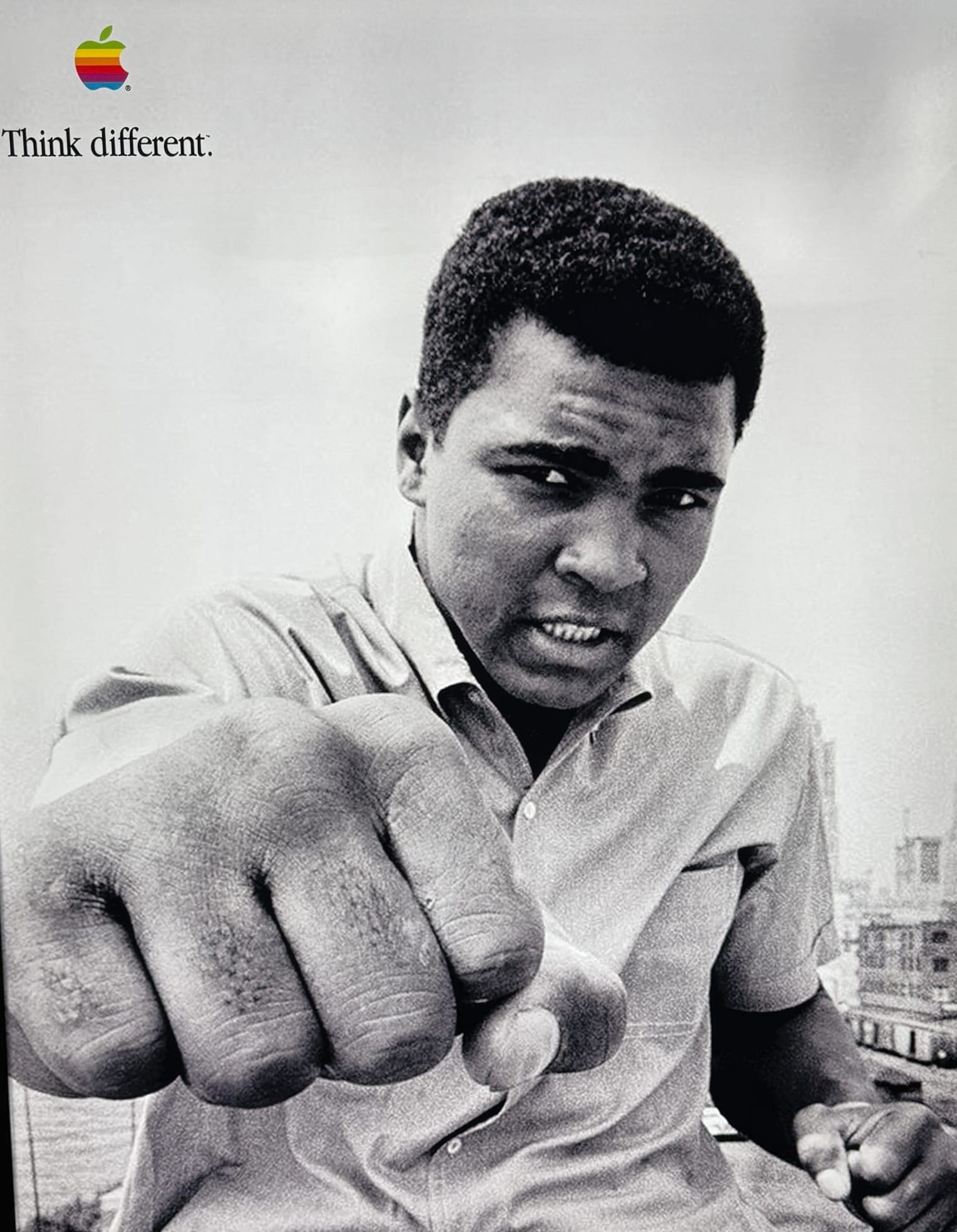
As the door opens, you could hear the quote in a longer version from the speakers. And the wall full of famous people. And one of them is a very special one for me. The one and only Muhammad Ali. After I saw his picture on the wall I understood what Steve Jobs meant with his quote and with "Think different". Because Muhammad Ali was a "misfit" and a "rebel" for the people in the time he lived at his prime. But for me he was and is the G.O.A.T.
After the long hallway I knew what was coming. Colorful and from another planet, iMac G3 designed with Jony Ive. And there was no beige color. Breaking out of the standards! Every time I talked with older colleagues, they tell me "yeah I know that computer, a lot of people had one of those" or "I had one of these too, great time!"
iMac G3 (1998)
The iMac G3 brought color to our desks and made Apple cool again. But Steve Jobs and Jony Ive didn't stop there. They didn't just want to change our living rooms they wanted to change what we carry with us every single day. Walking into the next section, it was time to leave the desk behind and put '1,000 songs in your pocket'
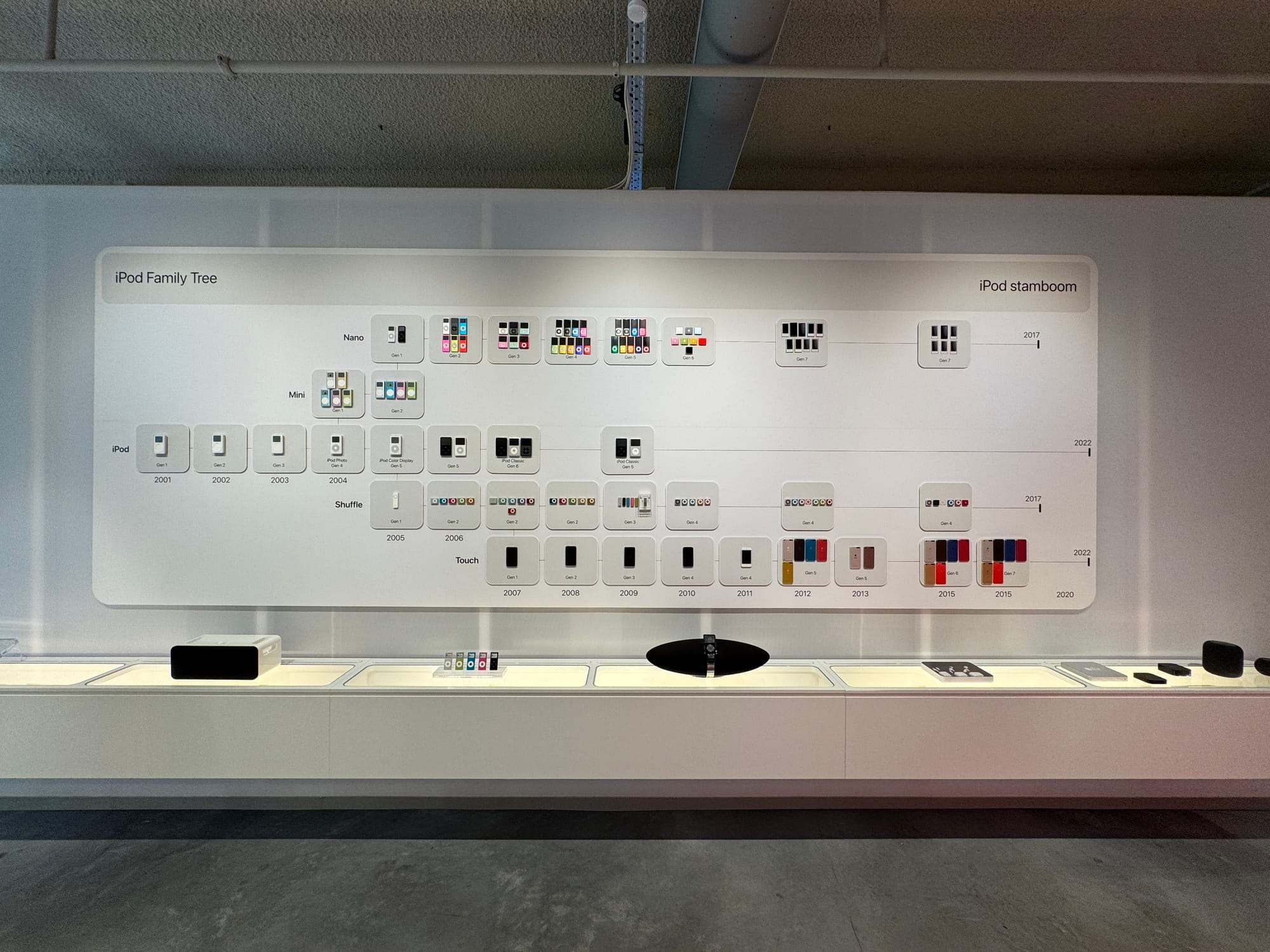
The iPod (2001)
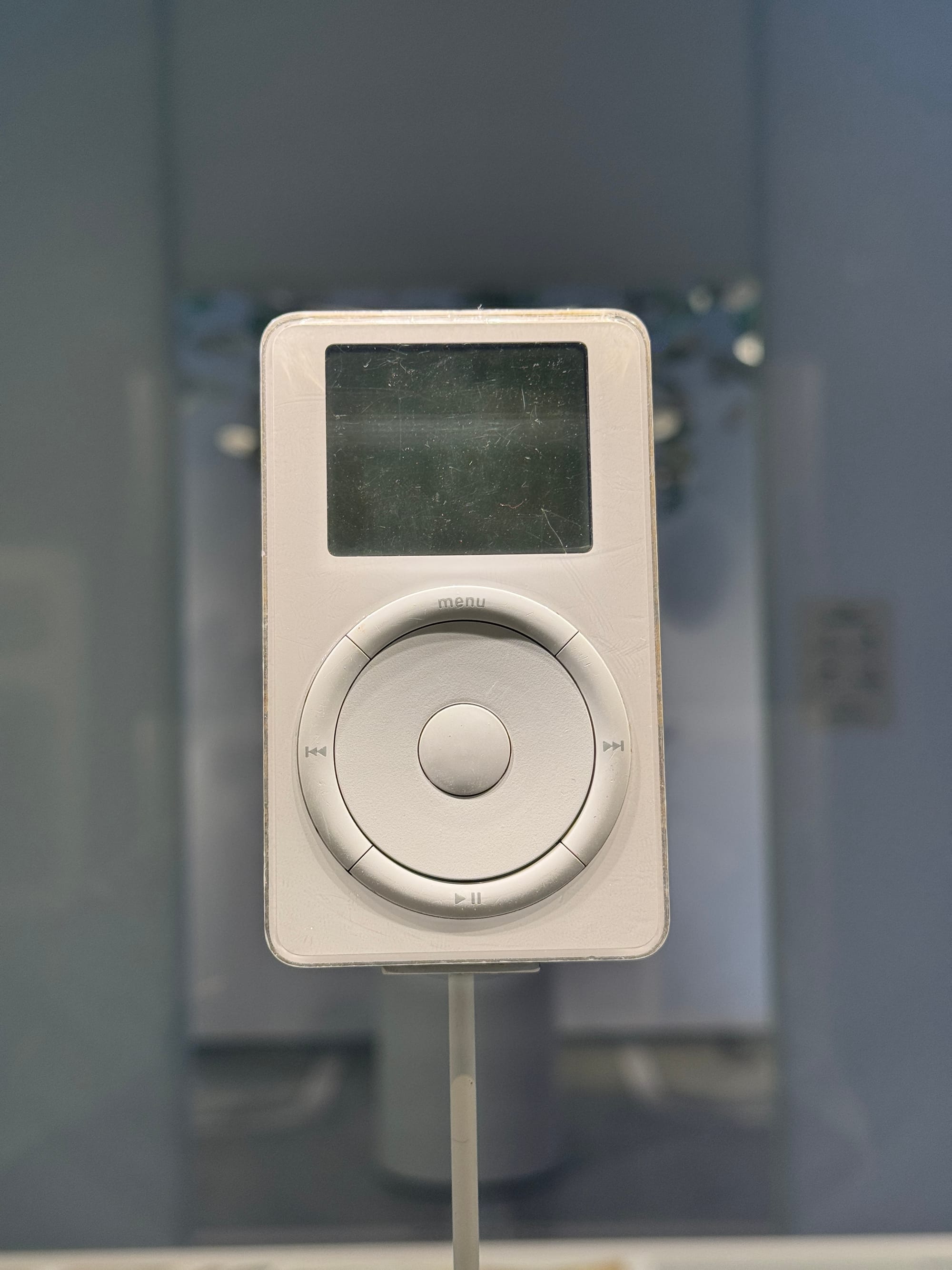
Maybe I don’t remember the very first iPod, but the 2nd generation? Oh, I remember that. Everyone in my school seemed to have one, from the Shuffle to the Nano to the Touch. Back then, we didn’t have the money for such pricy tech, but even as a kid, I knew this company was something special. The haptics, the “1,000 songs in your pocket” marketing, the design… how could you not want one?
Moving through the museum, I passed the iPad section a little bit faster. While the device didn't feel as "revolutionary" to me personally, since I used an iPad Pro for my studies, I couldn’t deny the impact and the function of it. I remember how much the Apple Pencil blew my mind the first time I used it; the precision was unlike anything I had experienced.
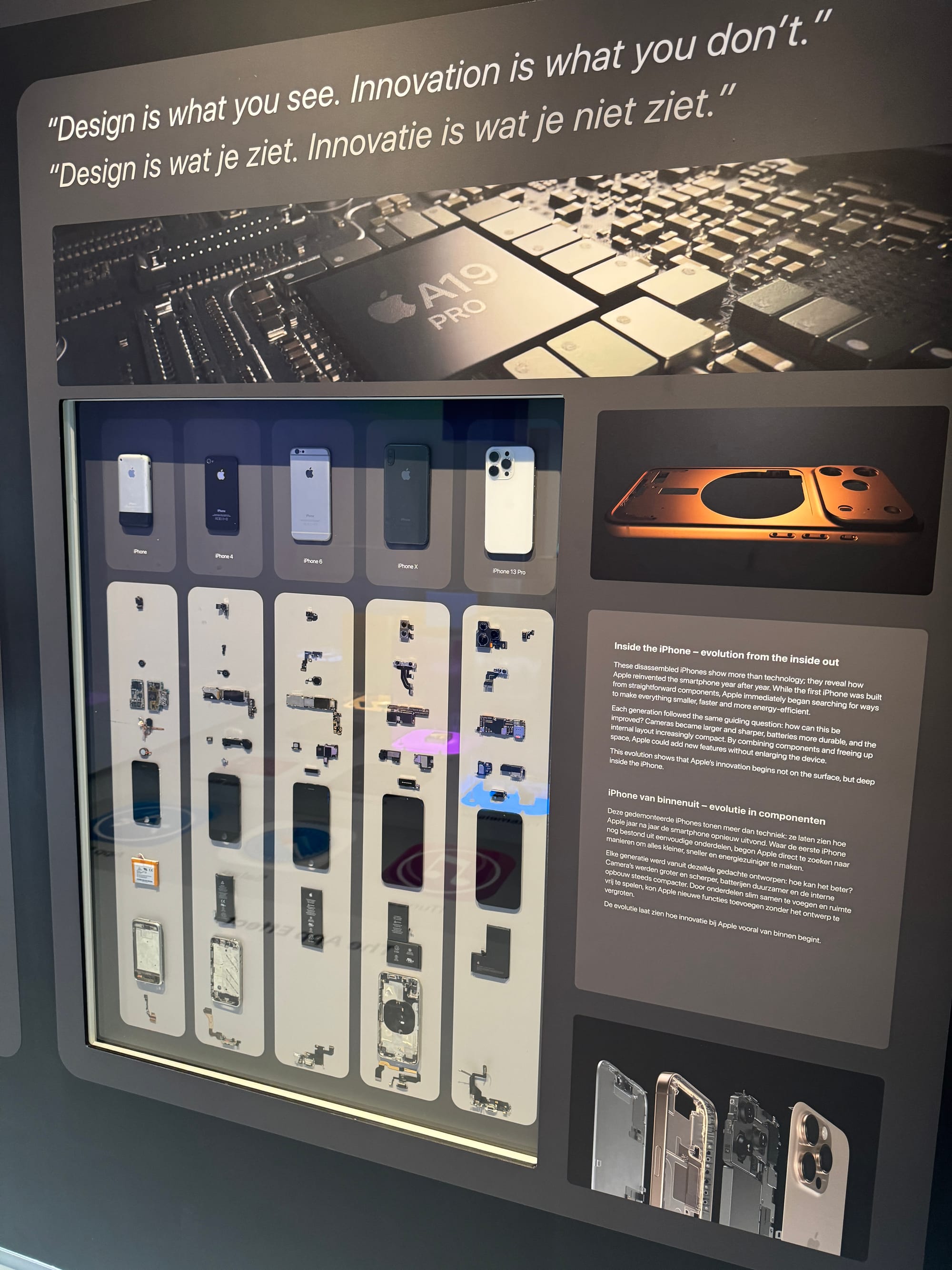
iPhone (2007)
Then, we reached the final chapter: the iPhone
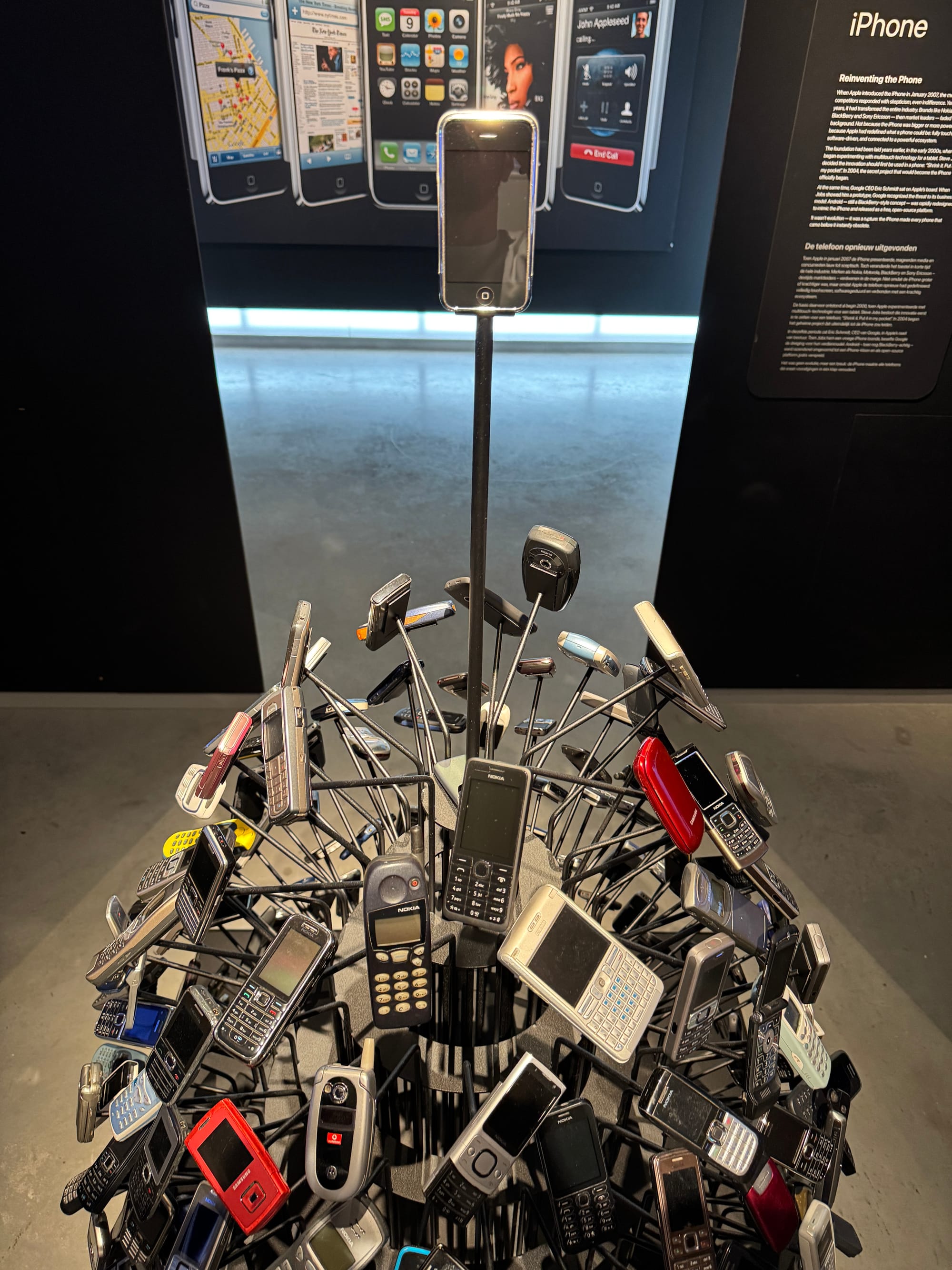
Seeing it there, my mind teleported back to late 2007. My uncle walked into my grandparents' house, held up that first iPhone, and said, “Look!” I remember thinking, “Wait, is that the thing everyone is talking about?” He let me hold it, and just touching that glass surface felt like holding the future. I wanted one immediately! But who buys an iPhone for a kid back then? It’s normal now, but that’s a topic for another day. It’s a bit sad, actually, how these things that were once so magical have just become "normal" parts of our daily routine.
One more thing
It wouldn’t be a true Apple experience without a final "one more thing."
The museum saved the best for last: a room with four projectors creating a massive, immersive screen. They played a recap of Apple’s history, from the garage to the iPhone, all the way to Siri and modern AI. We stood there with goosebumps. It was bittersweet, thinking about how much has happened and that Steve Jobs isn't here to see it all.
I am so glad we made this trip. It wasn’t just a walk through history; it was a reminder that sometimes you have to “think different” even when the world tells you otherwise. It taught me that paths aren't always straight, and success often takes time.
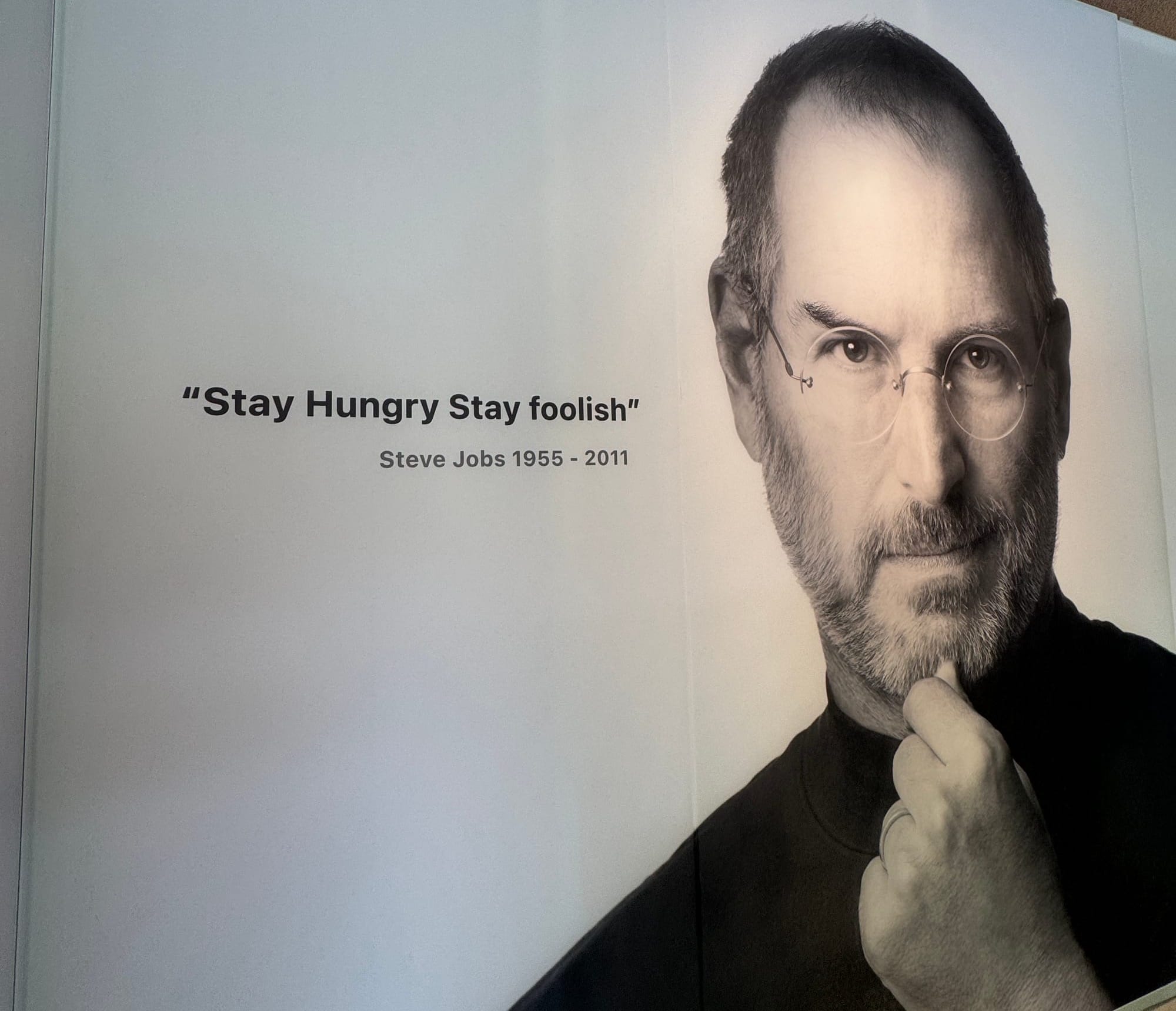
At the end of the day, all we can do is "stay hungry, stay foolish".
Thank you Steve Jobs 1955 - 2011